+91 91577 89399
Call Us

Call Us
Email Us
Get Direction
In healthcare, treatment does not end at consultation, discharge or procedure. Many treatments require follow-ups, reviews, repeat tests, therapy sessions, long-term monitoring and periodic consultations. However, in many hospitals and clinics, patients do not return for follow-ups unless they face problems again.
Many patients forget follow-ups, postpone visits, ignore review dates or simply do not schedule the next visit. This leads to discontinuity in care, delayed treatment, poor health outcomes and loss of long-term patient relationships. The Continuity Care Recall Engine is designed to ensure that patients return for follow-ups, reviews and continued care through structured recall and continuity communication.
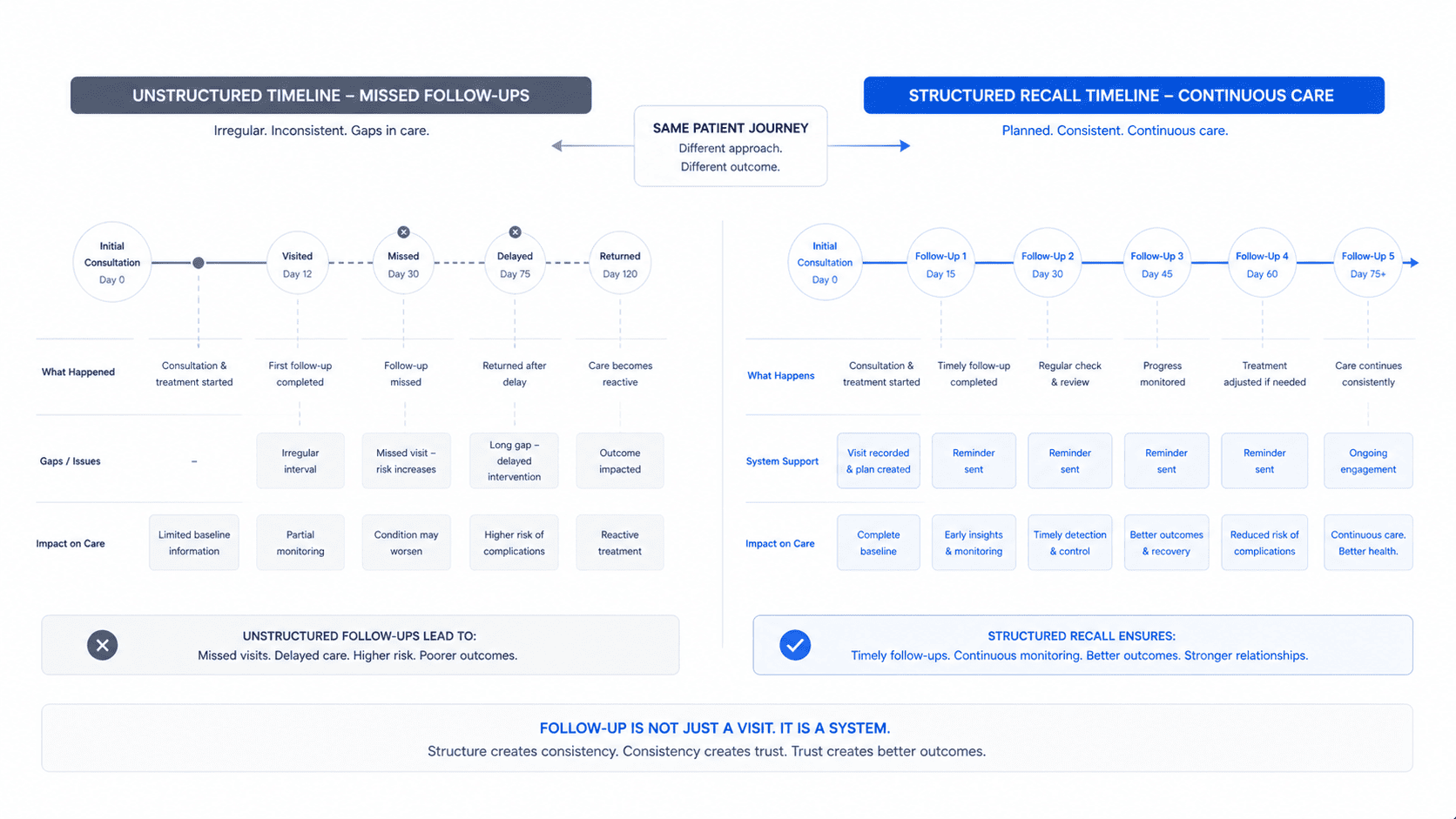
In many hospitals and clinics, missed follow-ups lead to discontinuity in care and missed treatment milestones.
This is not a treatment problem. This is a patient recall and continuity system problem.
The system ensures that patients are reminded, contacted and encouraged to return for follow-ups, reviews and continued care. The Continuity Care Recall Engine focuses on:
The objective is continuity of care, not just new patient inflow.
Identify patients who require follow-ups or periodic reviews.
Create recall timelines based on treatment or doctor advice.
Contact patients before their follow-up due dates.
Remind patients for tests, reviews or consultations.
Track whether the patient returned or not.
Reconnect with patients who missed their scheduled follow-ups.
Maintain long-term patient continuity communication.
This structured approach ensures patients do not get lost after consultation, procedure or discharge.
Many hospitals focus on new patients. This system focuses on continuity of existing patients. Continuity of care improves health outcomes.
Healthcare is not only about treating patients when they come.
Healthcare is about ensuring patients return when they should.
The Continuity Care Recall Engine ensures that patients do not miss follow-ups, reviews,
tests and long-term treatment continuity.